Motivational Characteristics
Call of Duty Modern Warfare has varying elements of behaviorism, self-determination theory, episodic memory, and social learning theory. The combination of rewards and reinforcement, psychological needs fulfillment, schemata building, and learning by observation and imitation provides an environment where players can build their skills and are motivated to act. Players’ motivation can be further delineated in this game through the attention, relevance, confidence, satisfaction, and volition (ARCS-V) model, flow, and the taxonomy of intrinsic motivation.
ARCS-V Model
The ARCS-V model of motivation was developed over time by John Keller with its focus on the reasoning for and strategies to enhance motivation in learners through the design of instructional activities (Keller, 2010). Originally coined the ARCS model, Keller felt the need for the addition of volition to account for learners’ persistence in activities (Keller, 2010, 2016). This model has its primary residence in the affective domain of learners, with varying results when applied to the cognitive domain (Li & Keller, 2018).
 The following five elements of ARCS-V form a comprehensive understanding of motivation in learners: (1) attention, as evidenced by the curiosity, interest, and arousal in the learner, with the three subcategories of perceptual arousal, inquiry arousal, and variability; (2) relevance, as evidenced by the perception of congruity between the learner’s goals and experiences with the material, and realized through the use of goal orientation, motive matching, familiarity, and modeling; (3) confidence, or the learner’s felt competence, which can be enhanced through clear expectations and scaffolding; (4) satisfaction, felt by the learner through a mix of extrinsic and intrinsic motivators and supported through positive reinforcement; and (5) volition, or a learner’s willful persistence, which is evidenced by a learner’s commitment and self-regulation (Kapp, 2012; Keller, 2010, 2016).
In addition to their application in instructional activities, the elements of Keller’s model are also evident in digital games (Dempsey & Johnson, 1998; Kapp, 2012), and are specifically elucidated by various aspects of Call of Duty Modern Warfare.
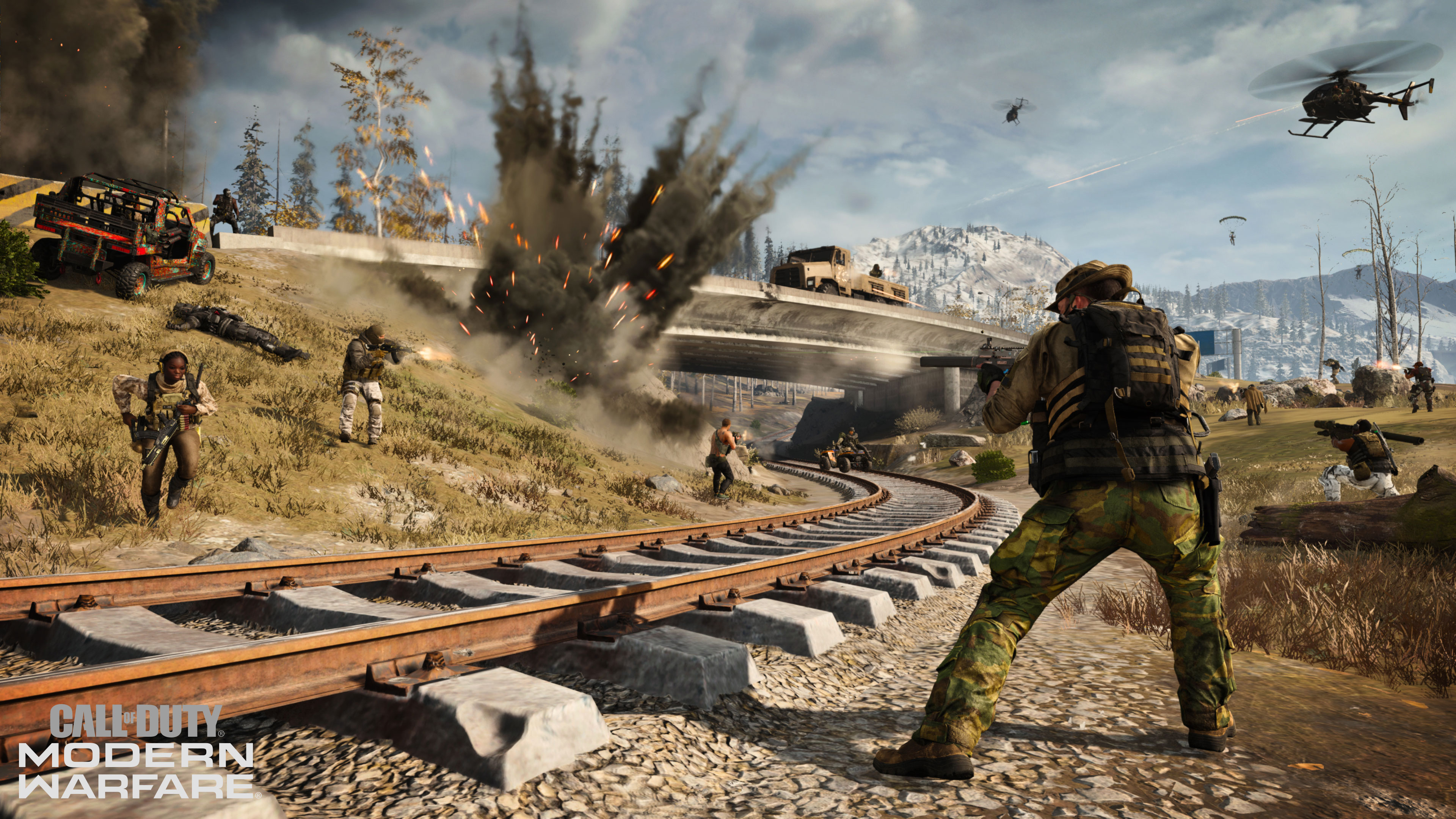
Each of the three types of attention gaining attributes are identifiable. Perceptual arousal is experienced in the almost constant unexpected appearance of aircraft, enemy combatants, missile strikes, explosions, or landmines (Kapp, 2012; Keller, 2010). Inquiry arousal is felt through the varying enemy formations and battlefields, triggering curiosity and problem seeking behavior in order to figure out which tactics will be successful (Kapp, 2012; Keller, 2010). These differing formations, threats, and maps also provide variability in the game.
 The specific components of goal orientation, motive matching, and familiarity as they relate to relevance are also present in the game. Goals are set for the players and players can set their own goals, such as learning how to use a weapon in order to understand how to defend against it. Motive matching is available because of the differing aspects of competition, collaboration, achievement seeking, and risk taking available in the game. In the battles, players compete to be the best on the leaderboard or ensure they survive until the end. Players may also collaborate with others over their headset to create strategies. Some players seek achievements, such as killing five people with one grenade or killing as many people as possible before they are killed to achieve a kill streak. Players can take great risk, running into rooms or openings, or they can hang back behind barricades. In addition to all of these options for motive matching, familiarity is built into the game through the use of the United States flag, realistic weapons, human characters in camouflage, and realistic maps and environments.
Just like the need of competence from self-determination theory is not well-supported in the game, conditions for confidence are also lacking. The game provides some encouragement and positive feedback for small successes, like a player’s first kill, and provides clear expectations that the goal is to kill and not be killed in order to win, but these are minimal compared with the level of challenge of the game.
Satisfaction is evidenced through the learning of new weapons. When these new weapons are mastered, players can see improved success in their game play with these weapons and can receive experience points and positive feedback for mastering these skills.
In addition to the traditional ARCS components in the game, volition is evidenced through the lack of participants exiting games early as well as the flow state produced in players.
Flow
 Flow can be described as the perfect balance between a player’s ability and the game’s difficulty level or the “ideal state between boredom and anxiety” (Kapp, 2012, Chapter 3, Flow, para. 2). Although difficult to design and test for, conditions for flow are optimized when the following are present: an achievable task, absence of distractions, clear goals, immediate feedback, effortless involvement, and control over actions (Kapp, 2012).
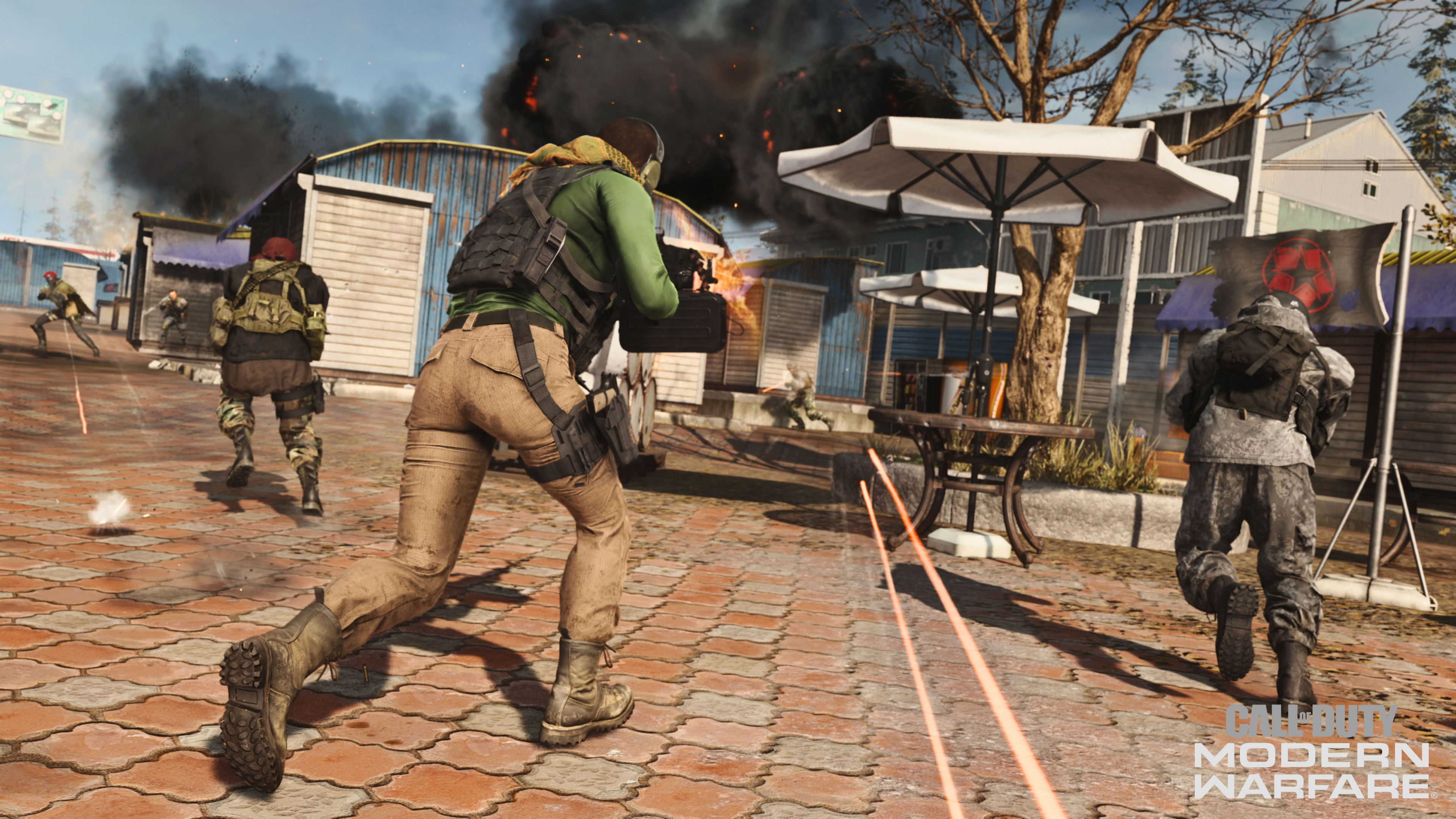
In Call of Duty Modern Warfare, flow is elusive at first because of the high difficulty level for novices. As player ability improves, the flow state becomes possible often. The flow state does not dissipate quickly because of the high difficulty level, the variety of enemy attacks, and the surprises built into the game.
The Taxonomy of Intrinsic Motivation
In contrast to extrinsic, mechanistic approaches to motivation, Malone and Lepper (1987) took an exclusively intrinsic approach to motivation. Working separately at first, Malone identified key aspects of computer games that make them intrinsically motivating, namely, challenge, fantasy, and curiosity (Kapp, 2012). He noted that his framework could be used “as a checklist of heuristics to be used in designing instructional environments” (Malone, 1981, p. 364). Lepper identified key principles for instructional design to improve intrinsic motivation, namely, control, challenge, curiosity and contextualization (Kapp, 2012). Together, Malone and Lepper’s components were the building blocks for the taxonomy of intrinsic motivations for learning (Kapp, 2012). This taxonomy includes the following four individual motivation factors: challenge, curiosity, control, fantasy, and the following three interpersonal motivation factors: cooperation, competition, and recognition (Kapp, 2012; Malone & Lepper, 1987).
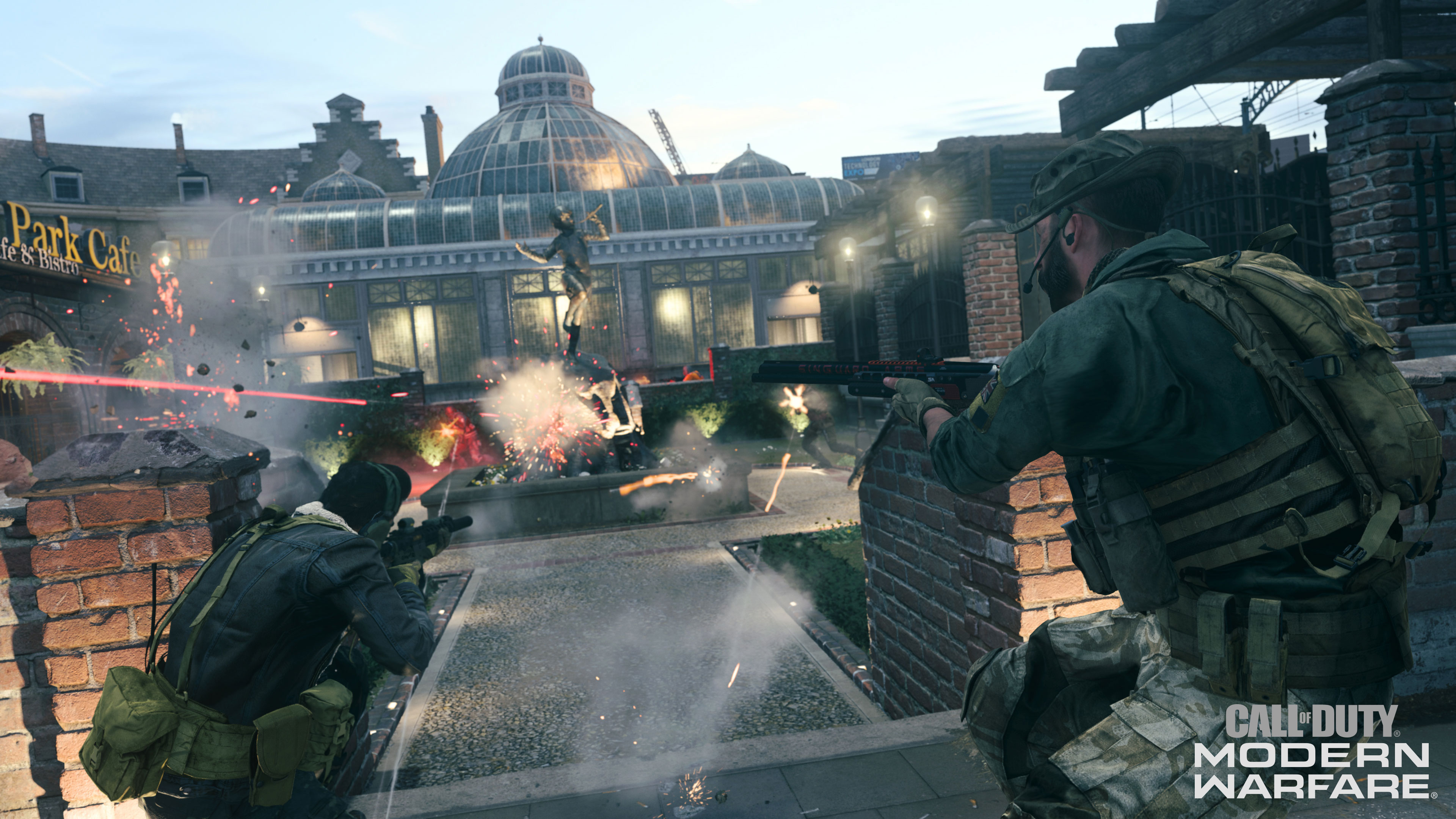 In Call of Duty Modern Warfare, various characteristics of Malone and Lepper’s taxonomy of intrinsic motivation are evident, including the four individual motivation factors. Challenge is experienced in the multiple goals set for players, such as killing the enemy, capturing the flag, earning achievements, and tasks to gain experience points. Uncertain outcomes exist in every game with the different team deployments, attack strategies, enemy ability levels, and fast-paced action that must be responded to in order to stay alive. Performance feedback, a strategy for incorporating challenge (Kapp, 2012), is given through statistics such as the kill to death ratio, wins versus losses, and weapon performance for each player.
Curiosity is built into the game because each battle is different. Every time, the players must figure out the best way to overcome the enemy they are presented with. Players may choose to try different weapons or different approaches until they can figure out a successful strategy. Once they do, however, the scene may change, piquing their curiosity again.
Although control of certain aspects of the game is limited, such as time, teammates, and opponents, the game environment is extremely reactive, which is an important component of control (Malone & Lepper, 1987). Just about every second, players must react to a new explosion or enemy gunfire. Players also have the ability to choose which weapons they want to use and to create their own loadout or set of weapons, guns, and grenades.
Finally, fantasy is a defining characteristic of the game. Players can die over and over in a war-like experience and come back. Players can jump from the top of a building and pull a parachute out again and again without ever running out.
In addition to these individual motivation factors, Call of Duty Modern Warfare demonstrates the interpersonal motivation factors of cooperation, competition, and recognition. This is a multi-player online team game, where players work cooperatively on a team to achieve a victory. Players must also compete against the players on the other team. Finally, recognition is gained through possessing various weapons, skins, and badges dependent on the quality of game play and by placement on the leaderboard at the end of each round.
Through the use of these individual and interpersonal intrinsic motivation factors, players of Call of Duty Modern Warfare are likely to find themselves internally motivated to play.
