Domains of Learning
Players learn game content, or knowledge, through playing a particular game. Knowledge has been classified using various systems. For example, Bloom’s taxonomy identifies varying levels of knowledge as remembering, understanding, applying, analyzing, evaluating, and creating (University of Utah, 2020). It is important for learners to access all of these levels to avoid inert knowledge and gain an improved ability for transfer (Aleven & Koedinger, 2002). As an added benefit of improved motivation from contextualization in games (Cordova & Lepper, 1996), “contextualizing learning within a given domain’s expectations and norms leads to social enculturation and can additionally influence players’ preparation for future learning and transfer” (Plass, Homer, & Kinzer, 2015). Games may possess the opportunity for varying depths of knowledge, providing a prime environment for transfer.
 These levels of knowledge correspond to certain types of knowledge. For example, in Bloom’s taxonomy, the lower levels of knowledge match up with factual knowledge and conceptual knowledge, while the higher levels match up with procedural knowledge and metacognitive knowledge (University of Utah, 2020). In terms of game play, relevant types of knowledge include declarative, conceptual, rules-based, procedural, soft skills, knowledge in the affective domain, and knowledge in the psychomotor domain (Kapp, 2012). A particular game may be very effective at some of these types of knowledge and less effective at others, so it is important to differentiate between and identify the types of knowledge present in a particular game (Kim, 2015).
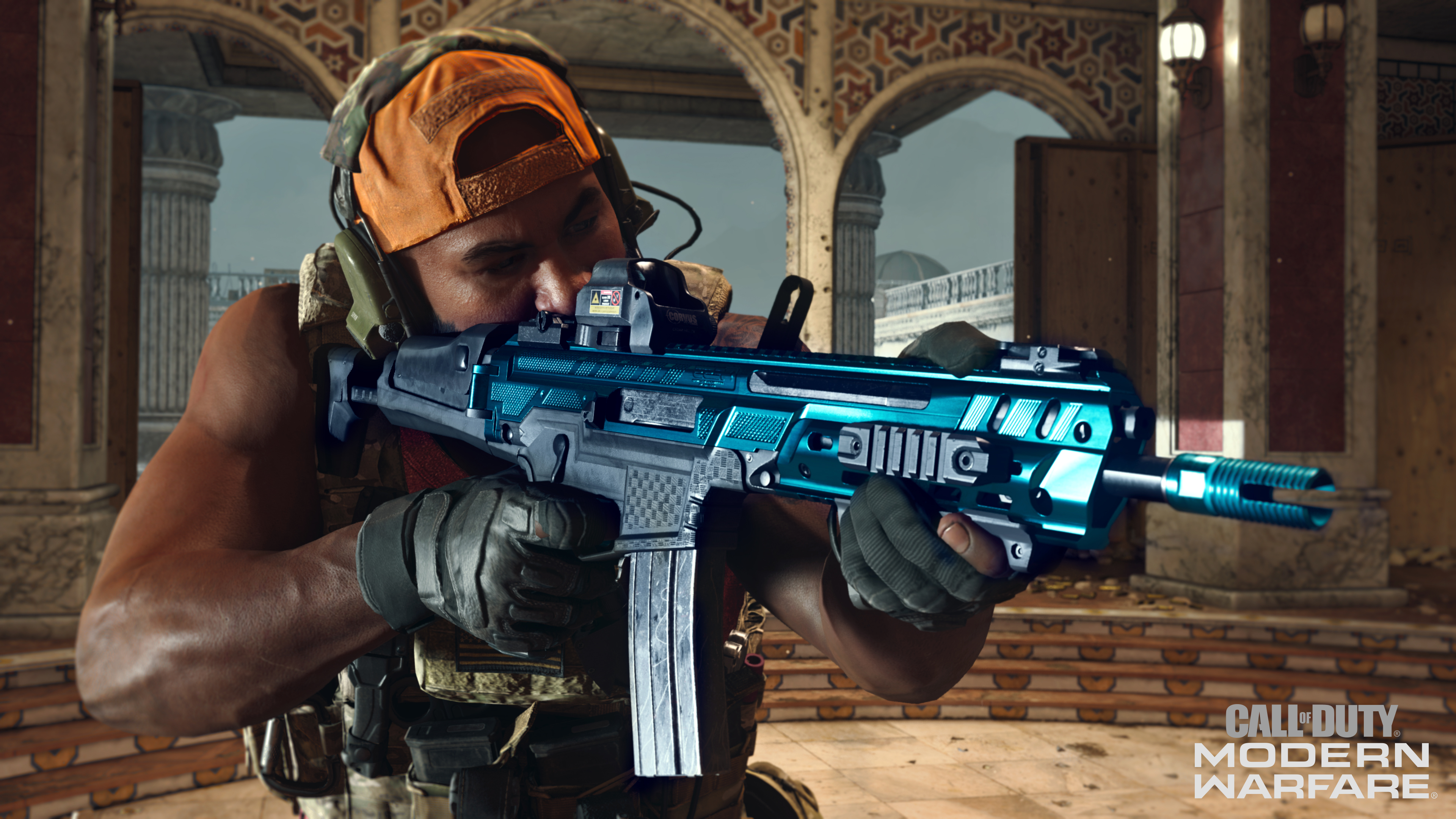
The types of knowledge that are most prevalent in Call of Duty Modern Warfare include declarative knowledge, conceptual knowledge, rule’s-based knowledge, and procedural knowledge. Declarative knowledge corresponds to factual knowledge and is supported in games through the use techniques such as matching, sorting, organizing, and elaboration (Kapp, 2012). Conceptual knowledge involves a group of “related ideas, events, or objects that have a common attribute” and is supported in games through matching, sorting, and experiencing the concept (Kapp, 2012, Chapter 8, Conceptual Knowledge, para. 1). Rule’s-based knowledge describes rules or relationships between different pieces of knowledge and is supported in games through examples, role play, and experiencing consequences (Kapp, 2012). Finally, procedural knowledge refers to the understanding of the steps and order necessary to complete a task successfully (Kapp, 2012). Procedural knowledge is supported in games by showing the big picture, providing reasoning behind the steps involved, and repeated practice (Kapp, 2012).
In Call of Duty Modern Warfare, these four types of knowledge appear through different game elements. For example, the replayability of the game allows for the formation of declarative knowledge. The same map and the same weapons can be used over and over again. The organization of information about the various types of weapons, such as the rifle, sniper, shotgun, pistol, marksman, light machine gun, and small machine gun, also provide the opportunity for declarative knowledge to form.
Sample of Loading Various Weaponry
(Hectorlo, 2019)
Players are immersed in the battle scene in a way that they can experience the concepts and learn from their mistakes. For example, players may begin to identify specific visual or audio cues that signify a dangerous or deadly situation, such as shapes on a roof (snipers) or footsteps (enemy combatants).
The basic setup of the game allows for players to experience consequences, resulting in the acquisition of rules-based knowledge. For example, if players kill themselves, it takes longer for them to come back. In certain modes, if players shoot their own teammates, then they will be kicked out of the game.
Finally, there are some procedures involved in Call of Duty Modern Warfare that players can practice multiple times. For example, if players want to use the rocket launcher, they must follow this procedure: (1) spot the enemy, (2) switch to the rocket launcher, (3) aim the rocket, (4) wait until it locks on the target, and (5) fire the rocket.
Each of these types of knowledge, namely declarative, conceptual, rules-based, and procedural, allow for different levels of learning within the players.
